Charting Threshold Conditions for Bonus Release Across British Mobile Applications Focused on Poker Tournaments and Live Sports Events
Written by Ben Bennett · Aug 5, 2026
Charting Threshold Conditions for Bonus Release Across British Mobile Applications Focused on Poker Tournaments and Live Sports Events
British mobile applications handling poker tournaments and live sports events operate with defined threshold conditions that determine when bonuses become available for release, and these parameters vary by platform according to operator policies and player activity metrics. Data from industry reports indicate that release often hinges on combinations of completed tournament entries, minimum stake volumes, and session durations tracked through the app's backend systems. Observers note that platforms adjust these thresholds periodically to align with participation patterns, particularly during peak seasons when live sports events draw higher engagement.
Key Threshold Metrics in Poker Tournament Applications
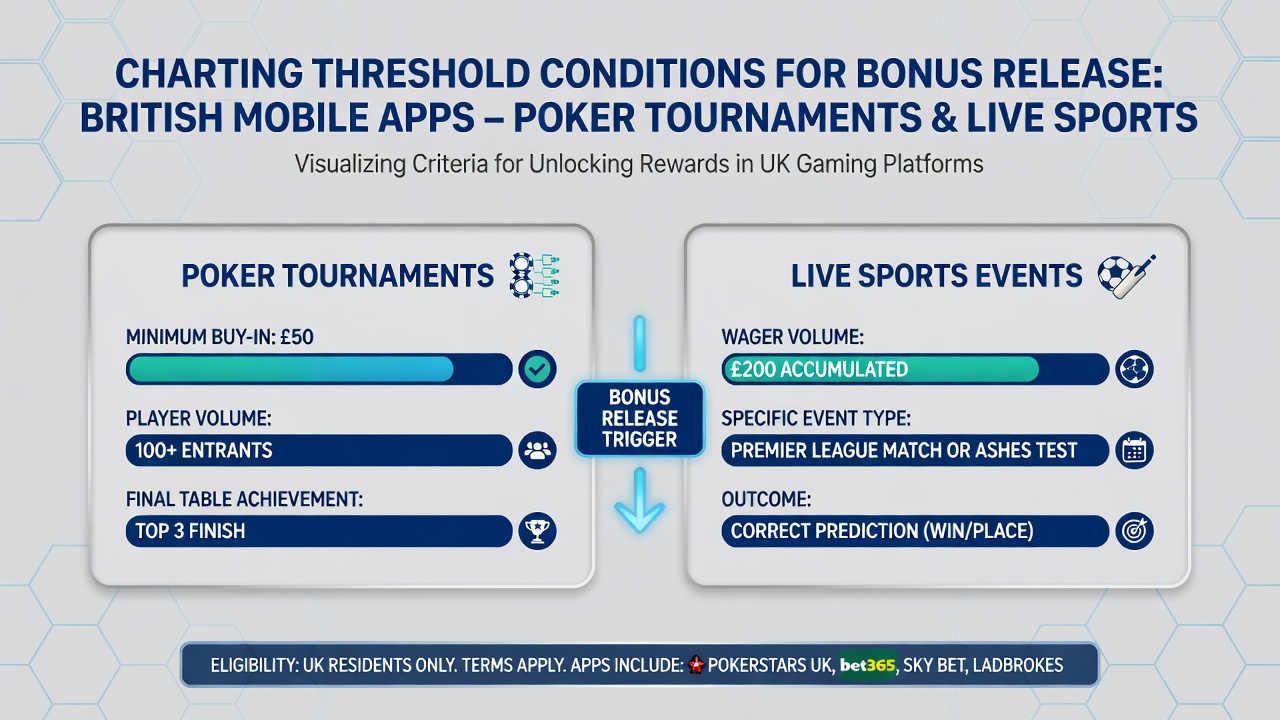
Applications focused on poker tournaments typically set release conditions around the number of buy-ins completed, total hands played, and achievement of specific return-on-investment levels within designated periods. Researchers tracking app data across multiple operators found that a common threshold requires users to participate in at least five multi-table tournaments with a cumulative buy-in exceeding £50 before bonus funds unlock. These conditions integrate with live tracking features that log player statistics in real time, allowing the system to calculate eligibility without manual intervention. What's interesting is how some platforms layer additional requirements, such as maintaining a minimum win rate across 100 hands, which connects directly to bonus release timing and prevents premature activation on low-activity accounts.
Live Sports Event Thresholds on Mobile Platforms
Live sports betting modules within the same applications apply thresholds centered on in-play wager volumes, event coverage duration, and accumulator completion rates. Figures from market analyses show that release frequently activates after a user places bets totaling £100 across three or more live events within a seven-day window, with emphasis on sports like football and tennis where real-time odds fluctuate rapidly. Applications monitor these activities through geolocation and session logs to confirm compliance, and thresholds often include a minimum number of live updates viewed per event to ensure active engagement rather than passive account holding. And because live events occur on irregular schedules, operators calibrate these conditions to match fixture calendars, such as those intensifying around major tournaments in summer months.
Integration of Conditions Across Poker and Sports Features
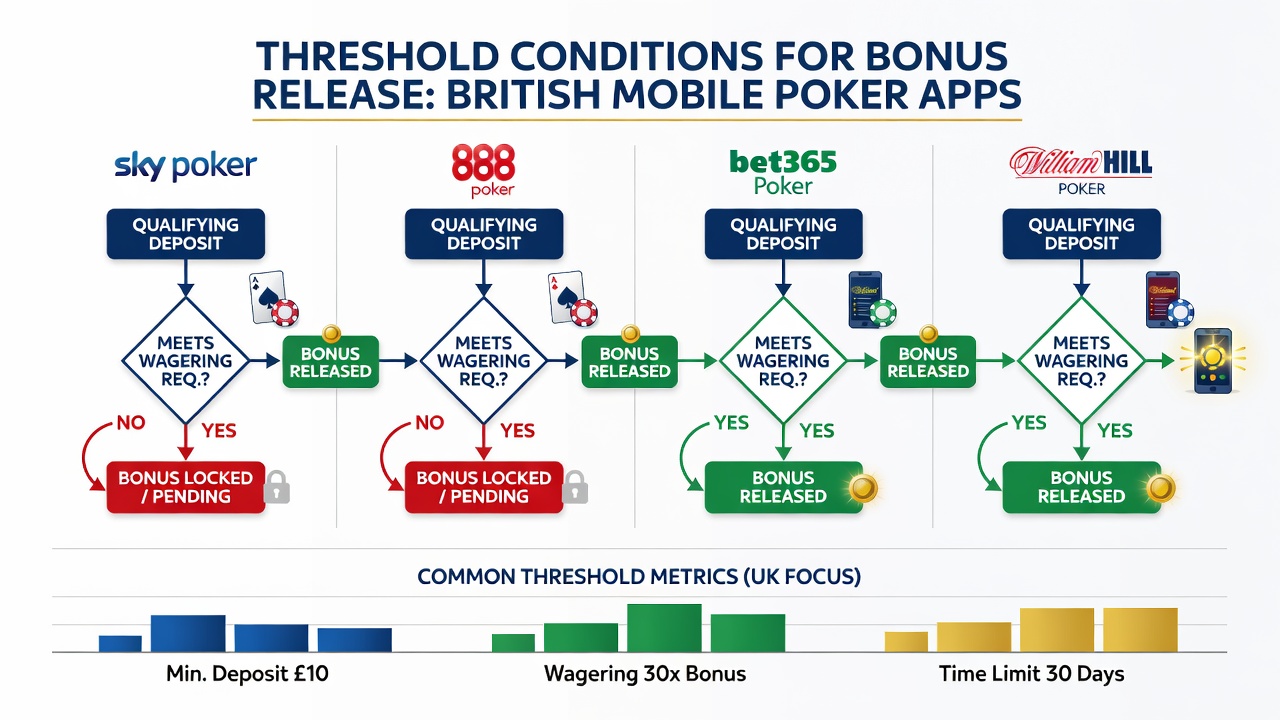
Many British mobile applications merge poker and live sports functionalities into unified user profiles, which means threshold conditions can cross over between the two verticals. Data compiled by the Australian Gambling Research Centre reveals that hybrid platforms sometimes allow poker tournament activity to count toward sports bonus release thresholds, provided the total engagement time reaches 120 minutes and spans both formats. This approach creates chained eligibility paths where completing a poker session contributes partial credit toward a live sports accumulator requirement. Those who've studied user flows observe that such integration relies on precise API handoffs between modules to avoid double-counting or gaps in the tracking process.
August 2026 Platform Updates and Threshold Adjustments
Platform updates scheduled around August 2026 introduced refined threshold calculations that incorporate machine learning models to predict optimal release points based on historical user cohorts. These models analyze variables including average session length and event type frequency, adjusting minimum thresholds dynamically for individual accounts while maintaining baseline operator standards. Reports from the Canadian Centre on Substance Use and Addiction highlight similar adaptive systems in other regulated markets, noting that British apps adopted comparable techniques to balance player retention with compliance metrics. The changes coincided with increased live sports scheduling that summer, prompting operators to elevate stake thresholds by 15 percent on average to accommodate higher traffic volumes.
Technical Implementation of Threshold Tracking
Mobile applications employ server-side verification to enforce threshold conditions, pulling data from secure databases that record every transaction and interaction timestamp. Experts have observed that release occurs only after automated audits confirm all criteria, such as verified device usage and absence of bonus abuse flags, which prevents premature payouts. This system supports scalability across thousands of concurrent users during major poker festival periods or live championship broadcasts. One study revealed that error rates in threshold verification dropped below 0.5 percent after operators implemented redundant logging across multiple data centers.
Conclusion
Threshold conditions for bonus release in British mobile applications centered on poker tournaments and live sports events rely on measurable activity benchmarks that platforms update in response to usage data and seasonal demands. These conditions ensure structured progression from participation to reward activation while maintaining operational consistency across poker and sports modules. Continued monitoring by regulatory bodies and research institutions will shape how these parameters evolve in subsequent periods.